Research · 2017 – 2018
Comparative Analysis of Control Techniques for High-Speed Mechatronic Systems
My B.Sc. thesis at DUET: a simulation study comparing five feedback control techniques for high-speed nanopositioning systems, an atomic force microscope (AFM) and a piezoelectric tube scanner (PZT). We designed and tuned each controller in MATLAB and Simulink, then compared their stability, speed, damping and tracking to find the best controller for each system.
- Control Systems
- MATLAB
- Simulink
- Nanopositioning
- Controller Design

Goal:
High-speed precision instruments such as atomic force microscopes and piezoelectric tube scanners are limited by a sharp mechanical resonance, which causes vibration and poor tracking at high speed. Our aim was to damp the first resonant mode of both systems and improve their tracking performance, then measure how different controllers performed on each system and select the best one for each.
What I built:
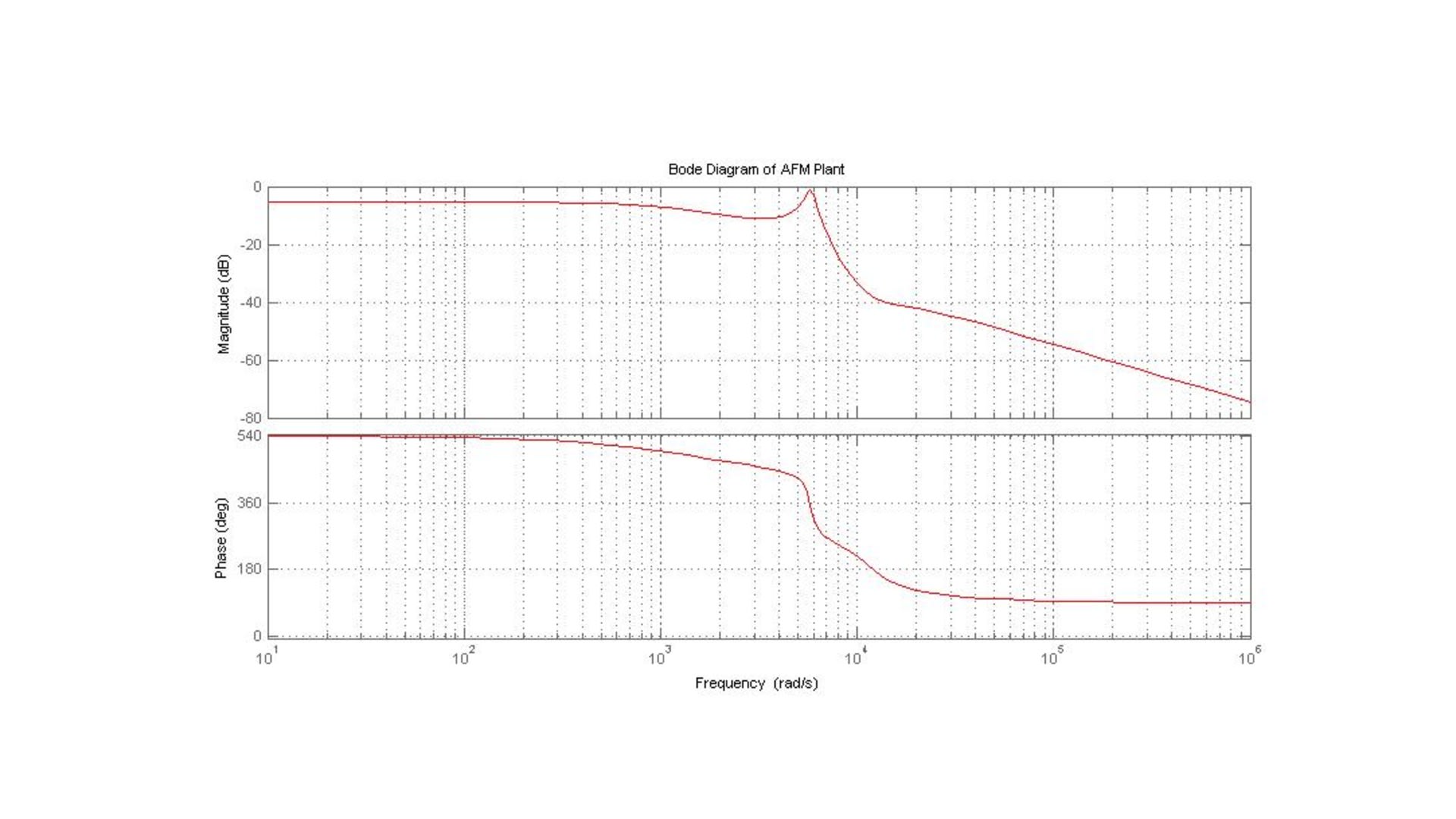
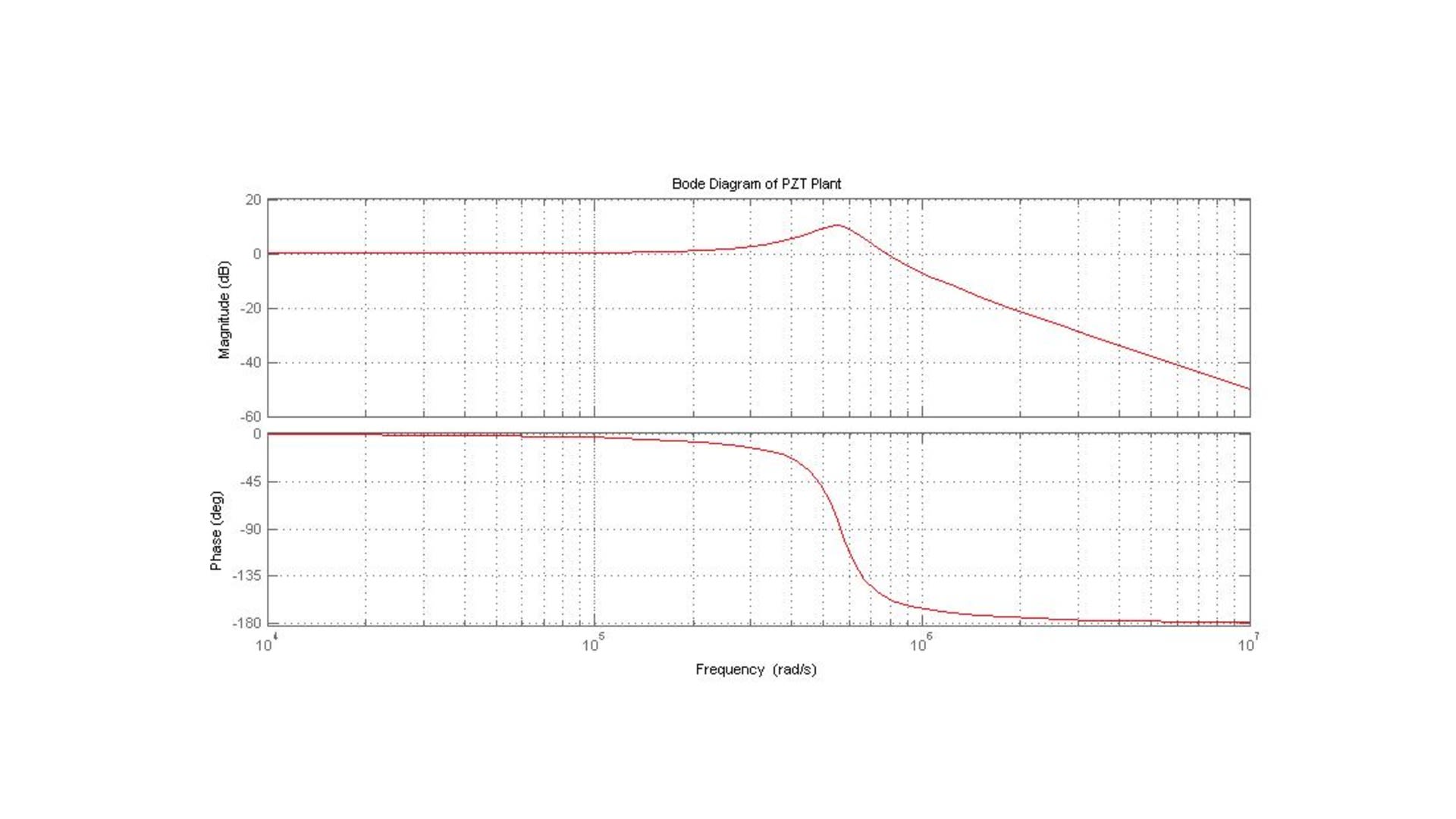
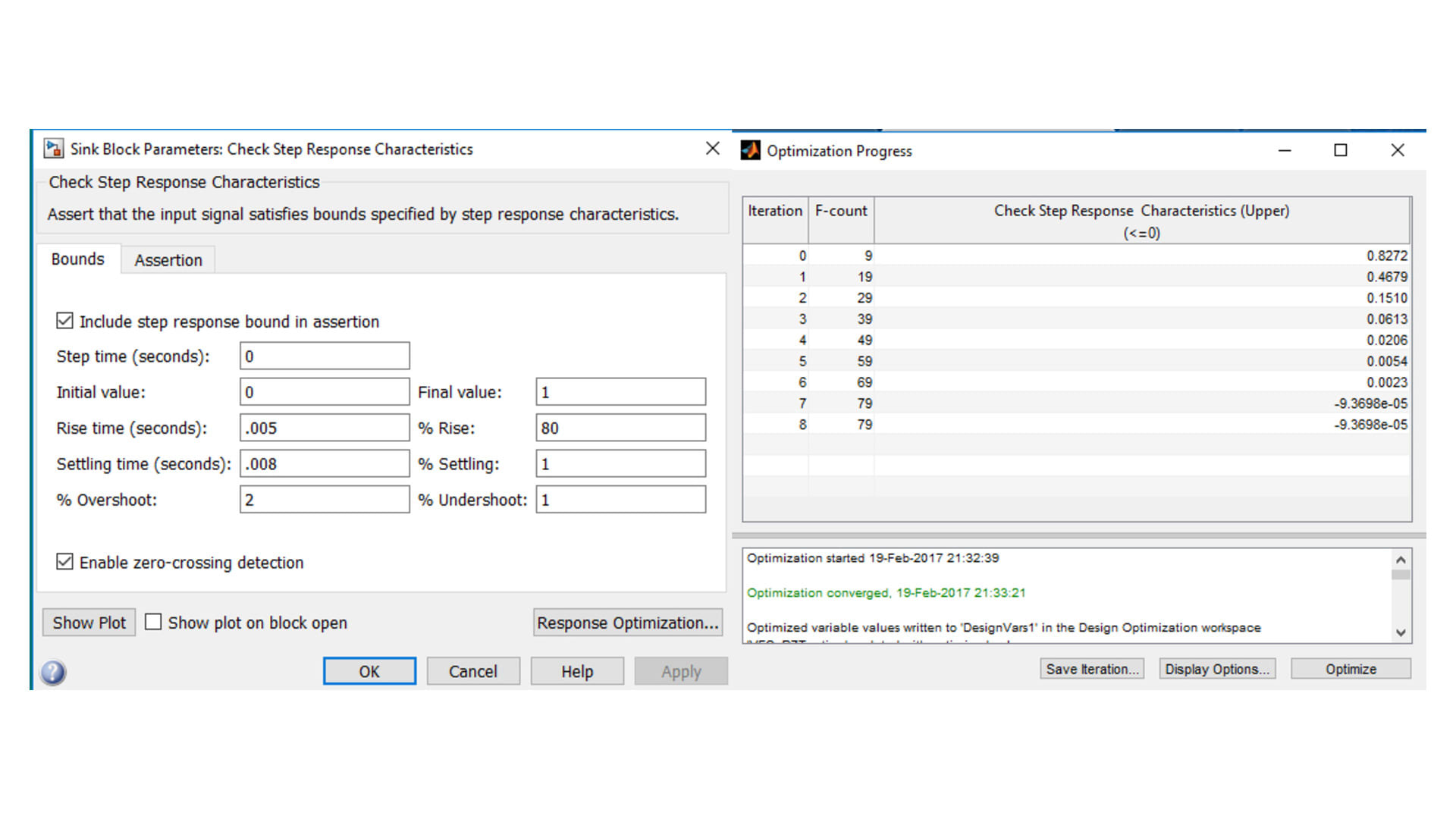
We modelled two plants from their transfer functions: an AFM with a first resonance near 960 Hz, and a PZT with a much higher resonant frequency. We designed five controllers for each plant: a PID controller with a notch filter, a positive position feedback (PPF) controller, a combined resonant and integral resonant controller, a velocity feedback controller (VFC) and a double velocity feedback controller (DVFC). We tuned each controller's parameters with Simulink Design Optimization against step-response requirements, then analysed the results with step responses and Bode plots, measuring rise time, settling time, overshoot, gain margin, phase margin and bandwidth.
My role:
One of three members of the thesis team, with Md. Sagor Hossain and Md. Rafiqul Islam, supervised by Mr. Alamgir Hossain, Lecturer, Department of EEE, DUET. I worked on the controller design, the MATLAB and Simulink modelling and optimisation, the analysis of the simulation results, and the thesis report and presentation.
Challenges / results:
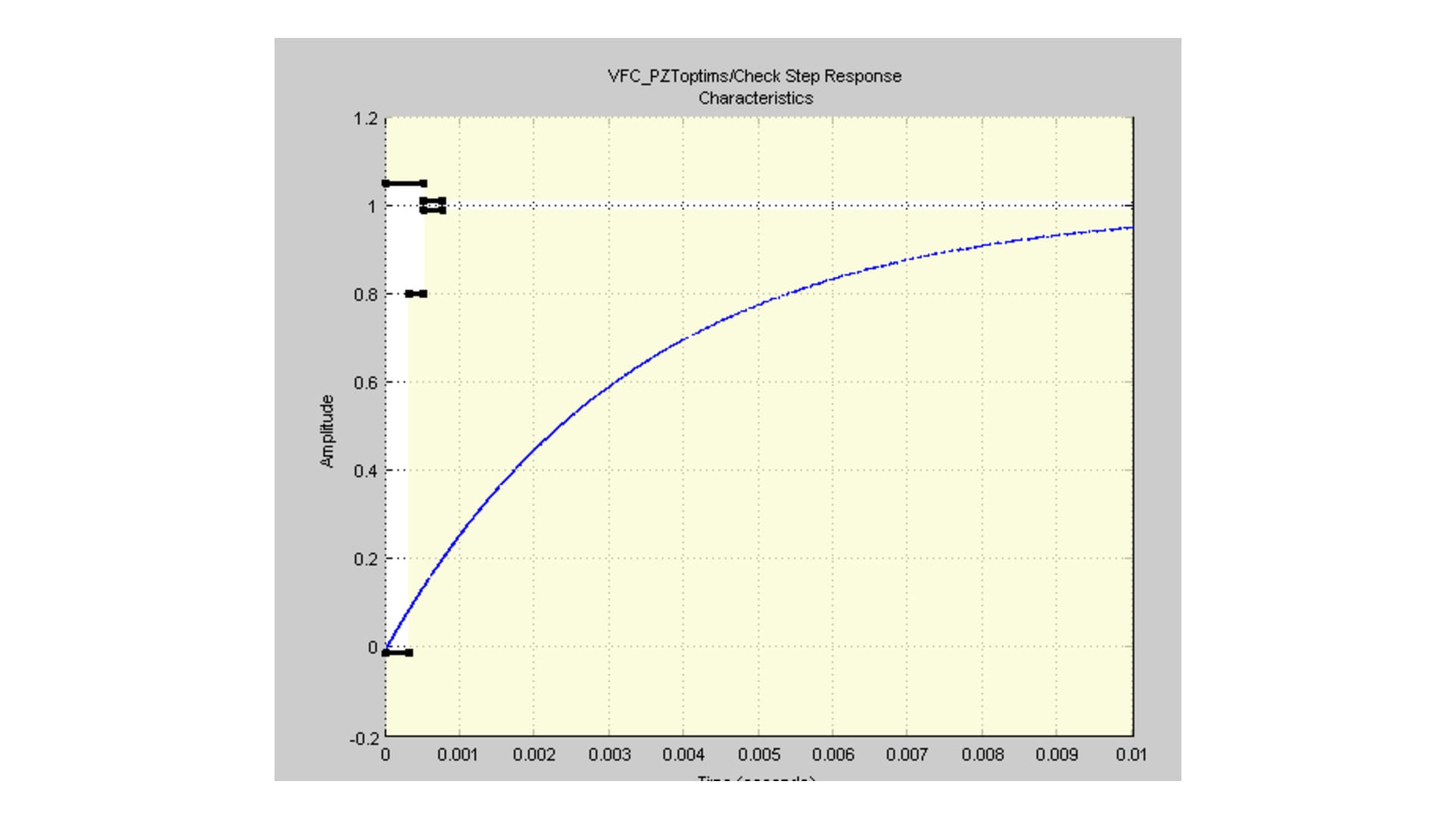
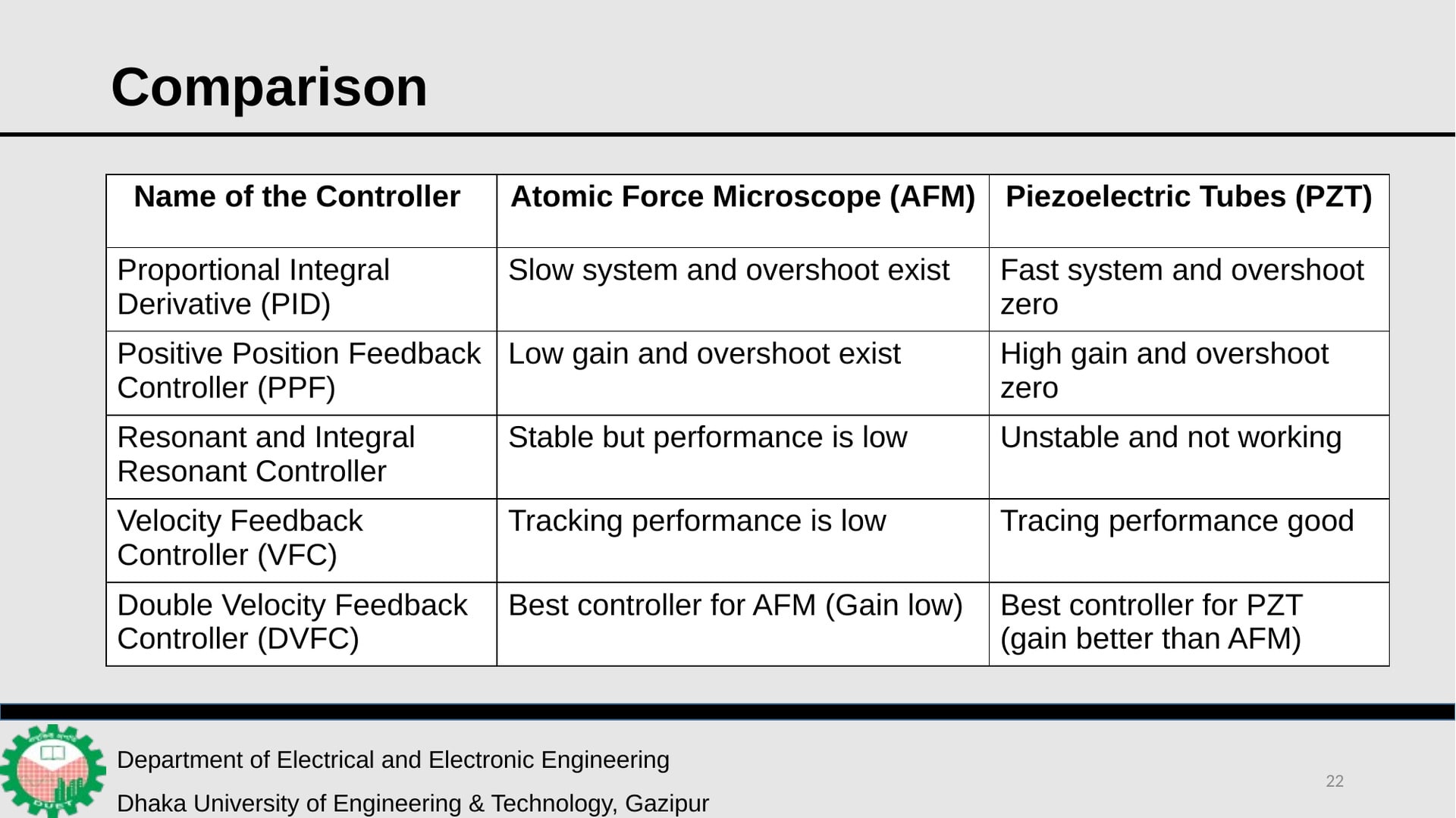
The same controller behaved very differently on the two plants. The PID controller was easy to implement and stable, but slow, with low tracking bandwidth. The PPF controller did not fully damp the first resonant mode and had a low gain margin. The combined resonant and integral resonant controller was stable on the AFM but with very high overshoot, and unstable on the PZT. The VFC gave a very good transient response with zero overshoot. The DVFC gave the fastest response and the best tracking, at the cost of a lower gain margin and a more complex design. We concluded that the velocity feedback family performed best on both systems: the VFC for the AFM and the DVFC for the PZT.
What came after:
The study gave me a solid grounding in feedback control, system modelling and controller optimisation. These skills shaped how I approach control problems, from tuning a drone's flight stability to the generation control work in my power plant career. We identified notch filters with phase stabilisation and other resonance compensation methods as the next steps for further improving these controllers.
Photos
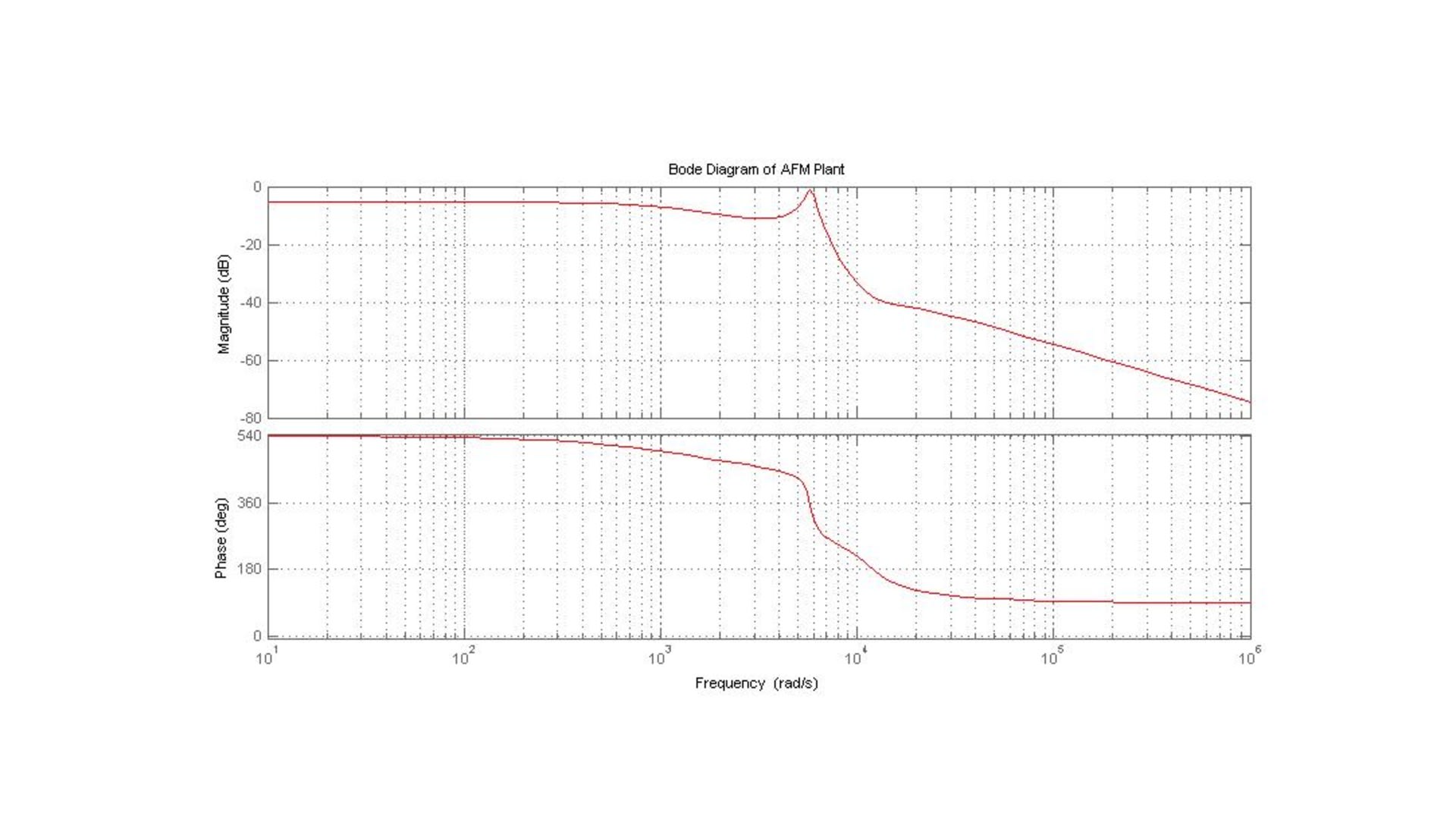
Bode plot of the atomic force microscope (AFM) plant, showing its first resonant peak
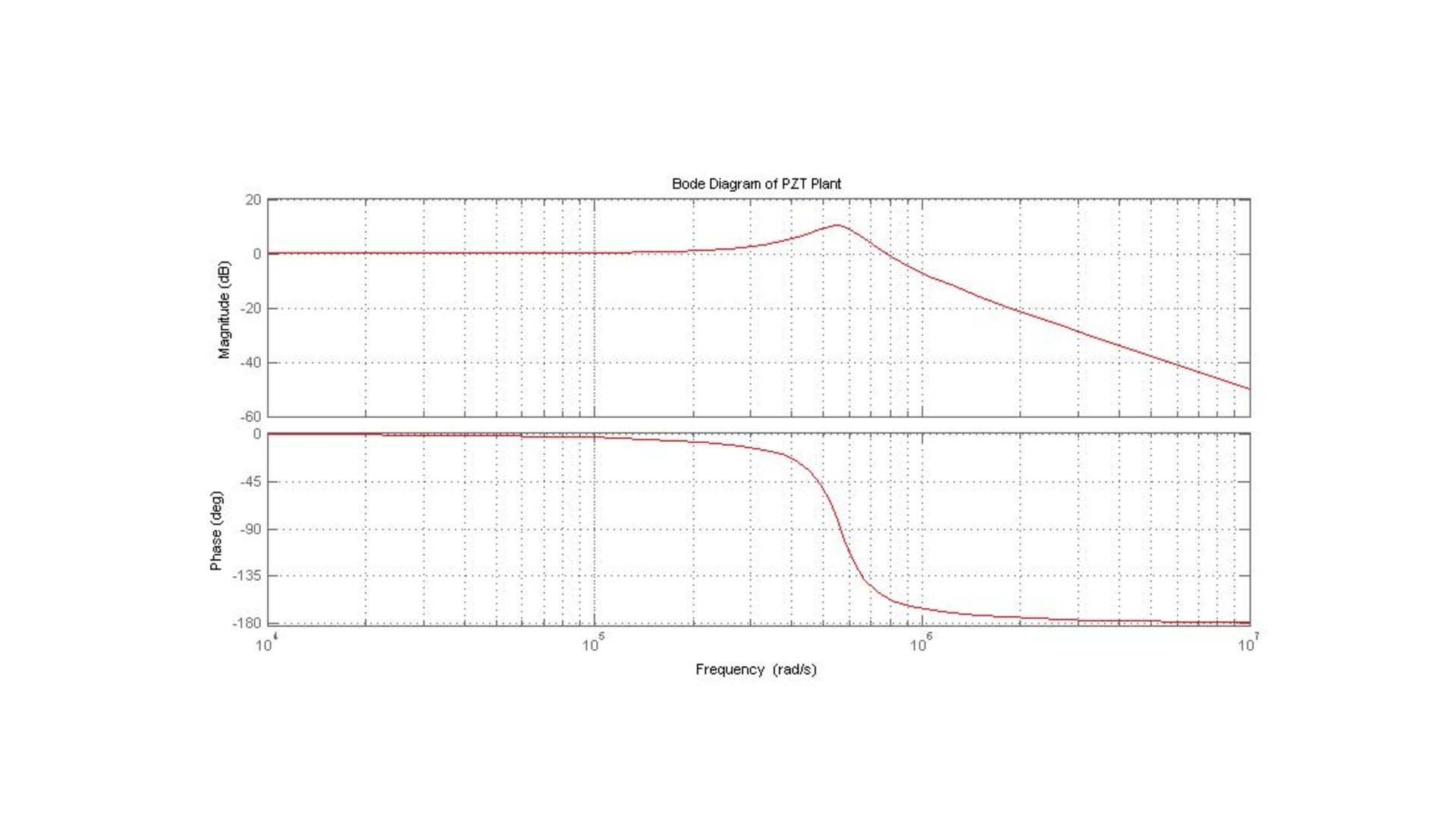
Bode plot of the piezoelectric tube (PZT) plant
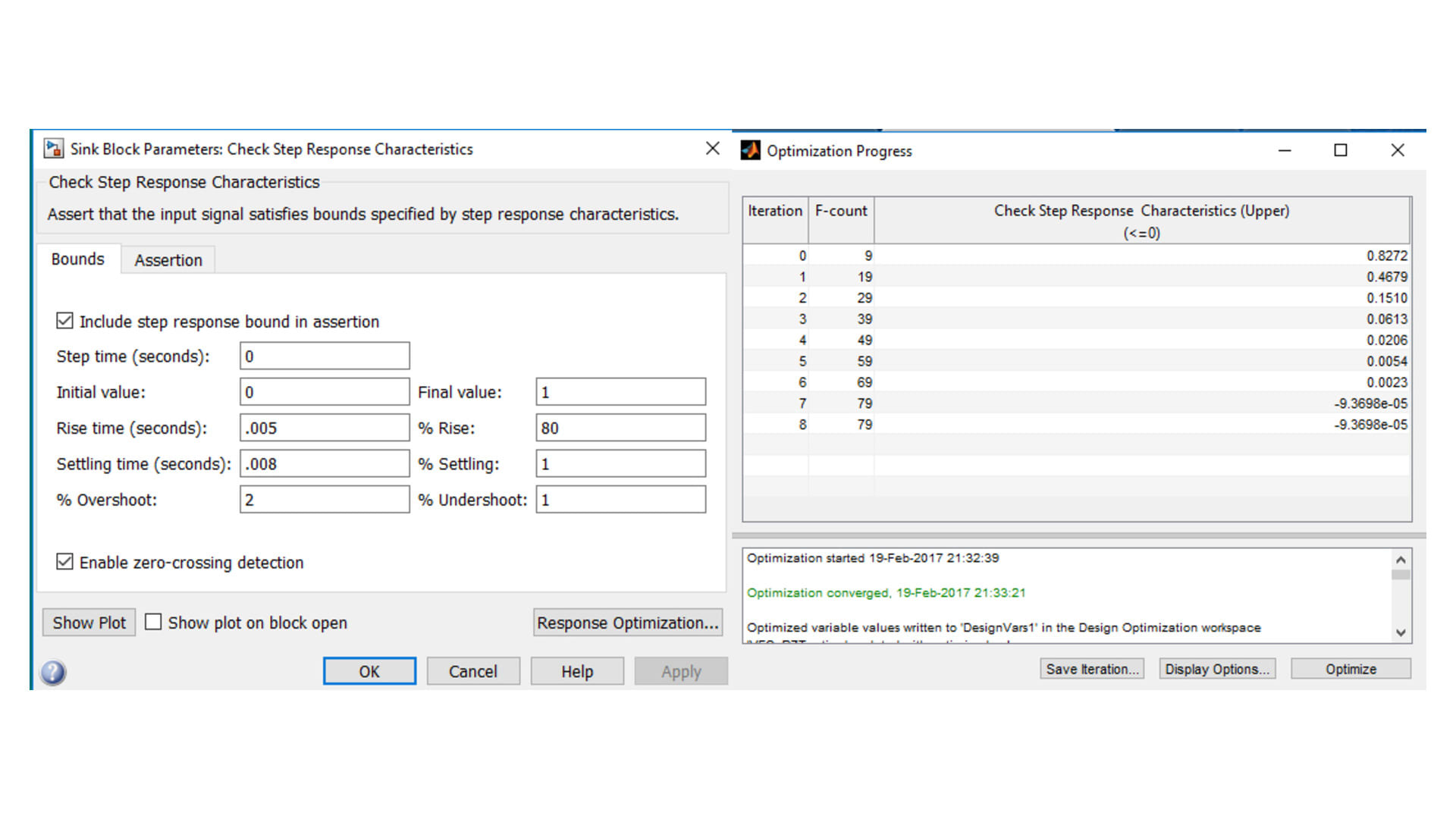
Tuning controller parameters with Simulink Design Optimization: step-response requirements and the optimisation converging
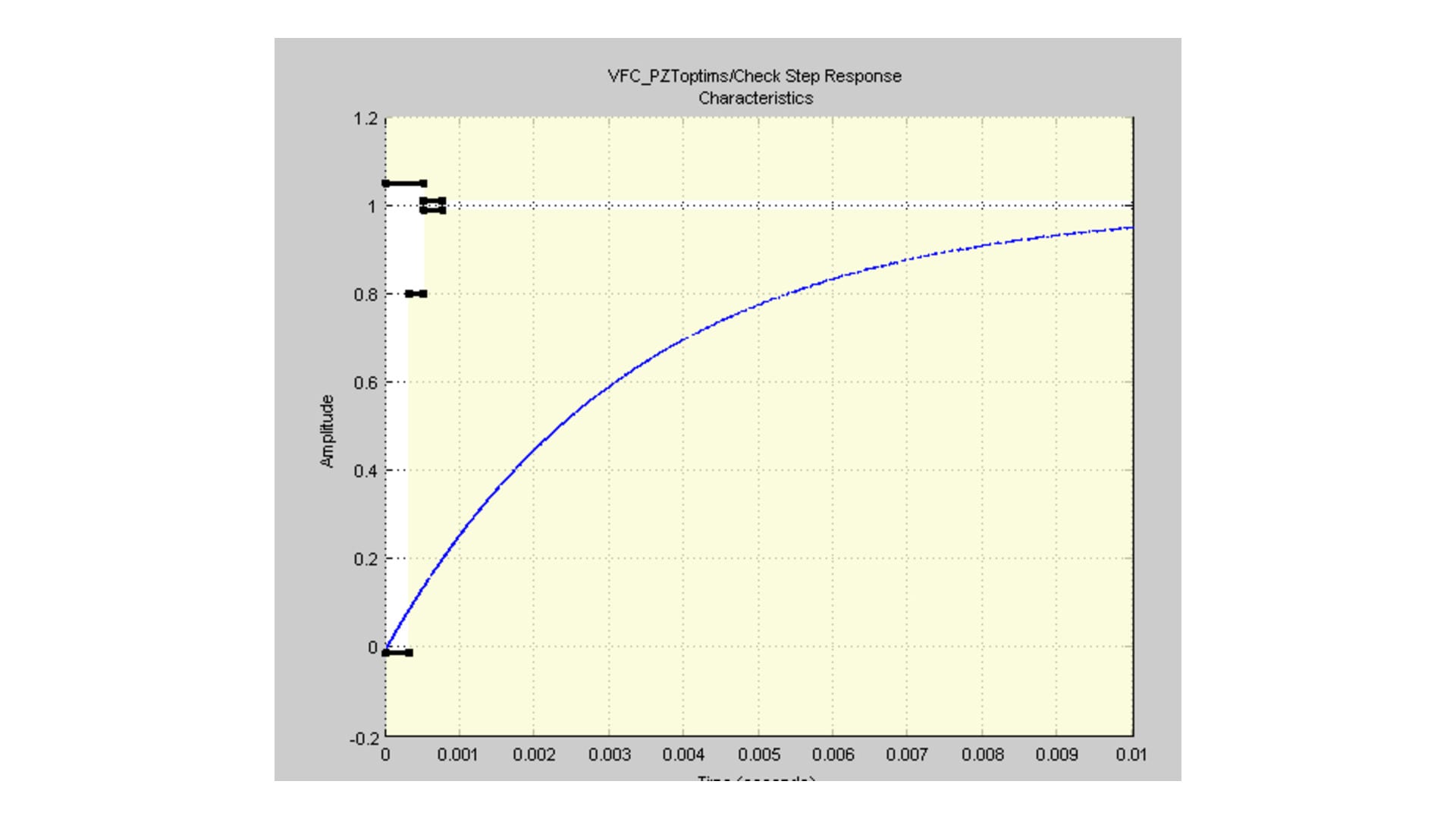
Step response of the PZT system with the velocity feedback controller after optimisation
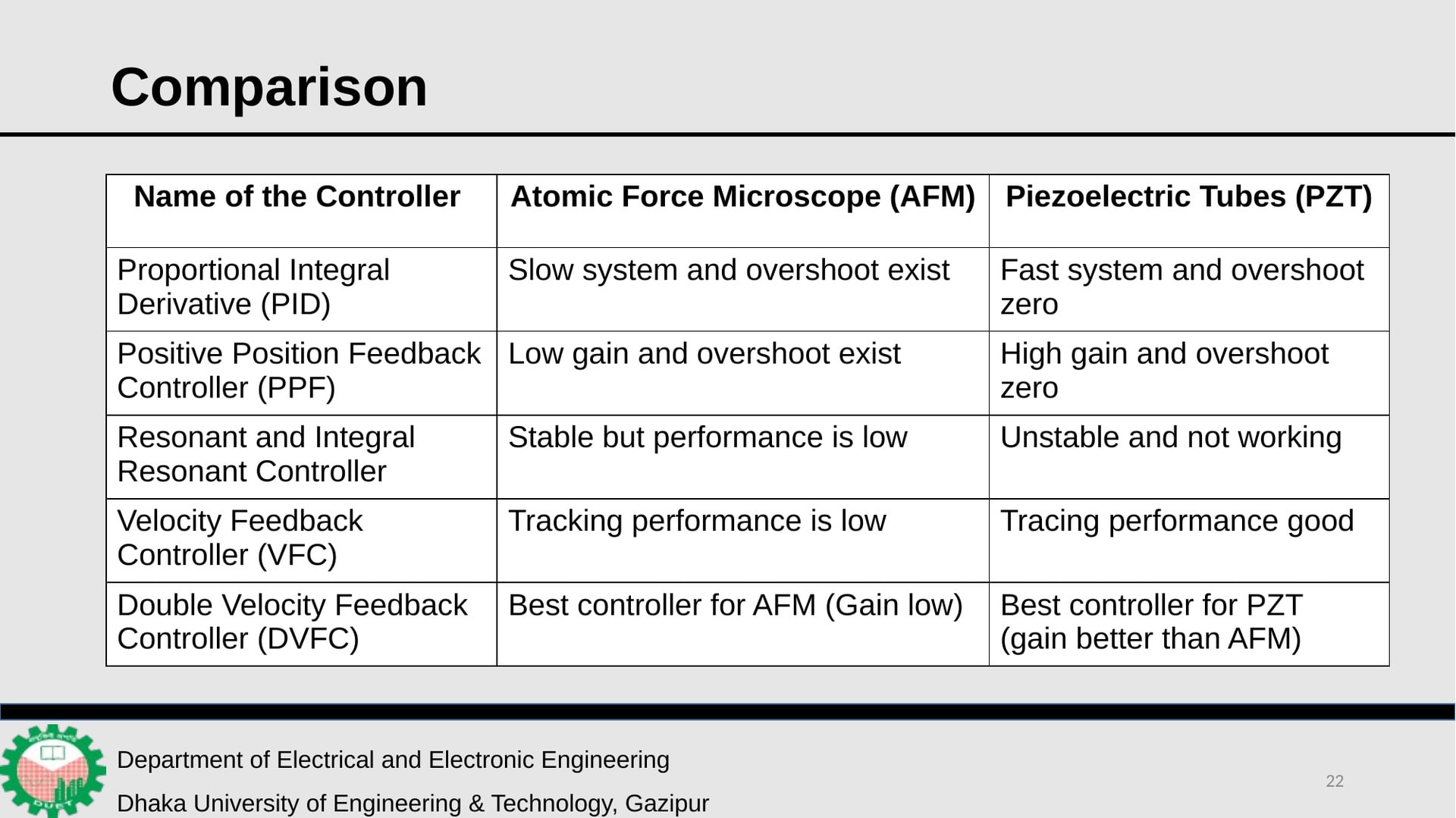
Comparison of the five control techniques on the AFM and PZT systems